Stop Hair Loss: 6 Proven Methods Honestly Compared
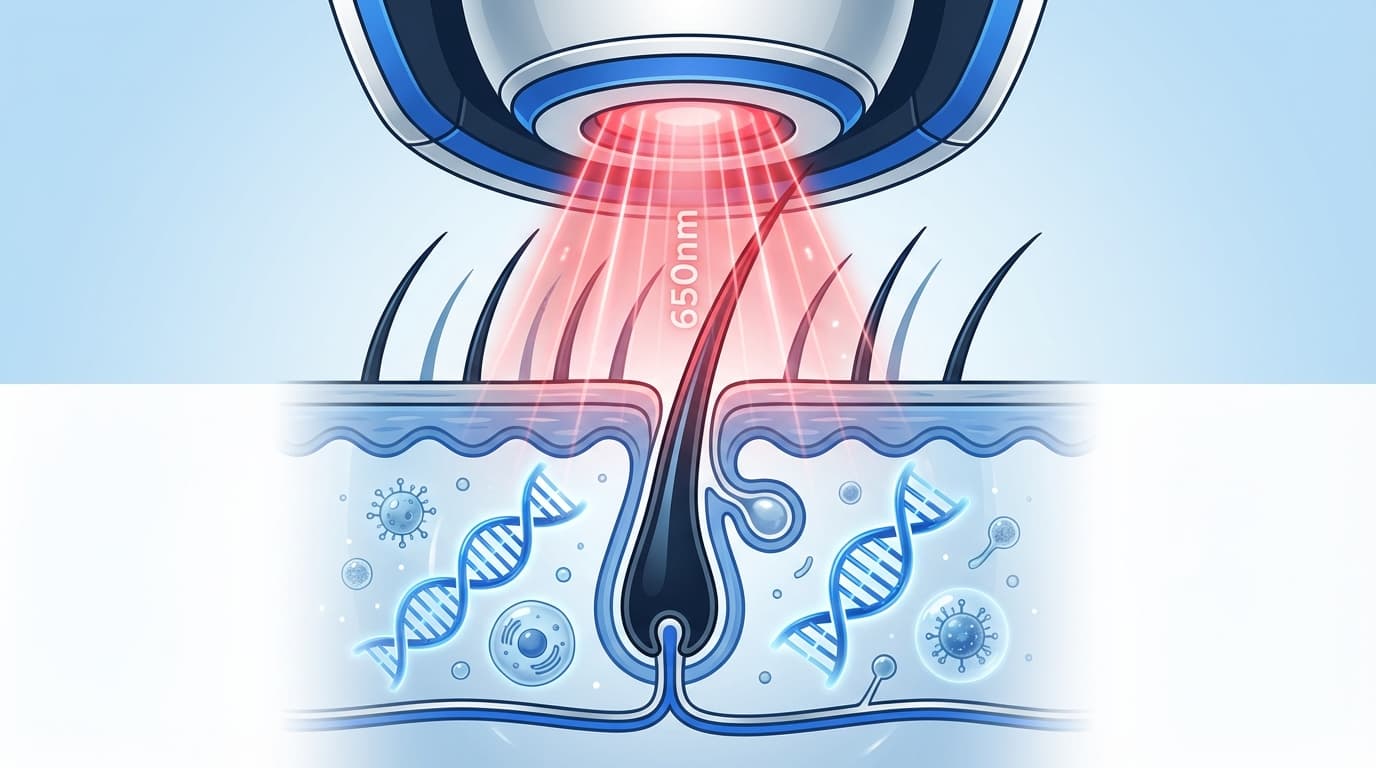
Table of contents
Let's be honest: if you're reading this, you've probably been dealing with thinning hair for a while. Maybe you can see more scalp than a year ago. Maybe more hair is ending up in the shower drain. And maybe you've already spent hours googling without getting any real answers.
I get it. There's so much information online — and half of it is trying to sell you something. That's why I wanted to write this article. Not as a sales pitch, but as an honest comparison of what's actually available. With the science included, the costs, the downsides, and without the bullshit.
Spoiler: there's no magic solution. But there are methods that are proven to work. The best option depends on your situation, your budget, and how much effort you're willing to put in.
Some context: why is your hair falling out?
Before we dive into solutions, it helps to understand what's actually happening. For the vast majority of people (over 95%), hair loss is androgenetic — genetically determined. This applies to both men and women, though it manifests differently.
What happens at a cellular level: the hormone DHT (dihydrotestosterone) gradually shrinks your hair follicles. They produce increasingly thinner, shorter hair, until they eventually stop altogether. This process takes years and is reversible in the early stages — and that's precisely where treatments can help.
Important: the sooner you start, the more results you can expect. A follicle that's still active but shrinking can be stimulated. A follicle that's been dead for years cannot. Timing matters.
The six methods compared
I'm comparing six treatments here that have been scientifically studied. No shampoo promises, no miracle cures from Instagram. These are the options your dermatologist would mention too.
Bewezen haaruitval behandelingen
Effectiviteit op basis van klinische studies
1. Hair transplant — the best option (if you have the budget)
I'm deliberately starting with hair transplants, because let's not pretend: this is the most effective treatment available. If you have the money and are willing to go through the procedure and recovery, a good transplant delivers the most visible and permanent results.
In a FUE transplant (Follicular Unit Extraction), individual follicles are harvested from the donor area at the back of your head and relocated to thinning areas. Because these follicles are genetically resistant to DHT, they continue to grow in their new location.
What the science says: Studies show a survival rate of transplanted follicles of 90-95% after one year (Bernstein et al., 2016). After 12-18 months, most patients see the full result.
The reality:
- Cost: €4,000 - €15,000 depending on grafts and clinic
- Recovery: 2-3 weeks initial phase, 6-12 months for full result
- You need sufficient donor area — not everyone is a candidate
- It doesn't stop underlying hair loss. Without additional treatment (finasteride or LLLT), hair around the transplant can still thin
- A second session may be needed after 5-10 years
Honestly: if money isn't an issue and your hair loss is significant, a transplant is the gold standard. But it's a surgical procedure with risks, costs, and downtime. And for many people, €8,000+ simply isn't an option.
2. Finasteride & dutasteride — the DHT blockers
If your hair loss is androgenetic (and it is in 95%+ of men), then DHT is the culprit. And there are medications that specifically target DHT: finasteride and dutasteride. These are the only treatments that directly block the cause of androgenetic hair loss.
Finasteride (brand name Propecia) inhibits 5-alpha reductase type II, reducing your DHT levels by about 70%. FDA-approved for male hair loss since 1997.
Dutasteride (brand name Avodart) inhibits both type I and type II, reducing DHT by about 90-98%. A meta-analysis by Zhou et al. (2019) with 576 participants concluded dutasteride showed significantly better results than finasteride.
The reality:
- Cost: €20-50 per month (prescription, ongoing)
- One pill per day — simpler than minoxidil
- Side effects: 2-4% of men experience sexual side effects (decreased libido, erectile issues). Reversible in most men after stopping
- Not suitable for women who are or may become pregnant (teratogenic)
- Stop taking it? Hair loss returns within 6-12 months
3. Laser helmet (LLLT) — the best non-invasive option without medication
The option I personally find most interesting for people who don't want a transplant and don't want medication: Low-Level Laser Therapy. This is what we work with at Lascure, so I'll be extra honest about the pros and cons.
The principle: red laser light (650-670 nm) penetrates the scalp and stimulates the mitochondria in your hair cells. This increases ATP production — your cells' energy source — causing hair follicles to stay in their growth phase longer and produce thicker hair.
What the science says: Afifi et al. (2017) analyzed 11 randomized controlled studies and concluded LLLT leads to a statistically significant increase in hair density. Jimenez et al. (2014) showed significantly better results than placebo after 26 weeks in 269 participants. A real-world study of 1,383 patients reported nearly 80% clinical effectiveness.
The reality:
- Cost: €599 - €1,399 one-time
- Zero side effects, no medication, no downtime
- 3x per week, 15-20 minutes per session
- Results after 12-24 weeks of consistent use
- Works best for early to moderate hair loss
- You need to keep using it for lasting results
Important: not all laser helmets are equal. The number of diodes, the type (VCSEL vs LED), and energy density all matter. Our earlier article covers this in detail.
4. Minoxidil — cheap and proven, but not for everyone
Minoxidil (brand name Rogaine) is probably the best-known hair loss treatment worldwide. Available without prescription and relatively inexpensive.
What the science says: Olsen et al. (2002) showed 5% minoxidil is more effective than 2%, with significant increases in hair counts after 48 weeks.
The reality:
- Cost: €15-30 per month (ongoing, forever)
- Apply 2x daily — every day, no exceptions
- Can cause irritation, itching, dry scalp
- The 'shedding' phase: temporary increased hair loss before improvement
- Stop using it? All progress lost within 3-6 months
- About 30-40% see little to no difference
Quick math: 20 years of minoxidil at €20/month = €4,800 — more than a laser helmet.
5. PRP therapy — promising but expensive
PRP (Platelet-Rich Plasma): blood is drawn, centrifuged, and plasma injected into the scalp. Growth factors are believed to stimulate follicles.
What the science says: Gentile et al. (2015) demonstrated significant hair density increases after 3 sessions. Alves & Grimalt (2018) found similar results. But study quality varies and there's no standardized protocol.
The reality:
- Cost: €300-500 per session, 3-6 needed, plus 1-2x/year maintenance
- First year total: €1,500 - €3,000
- Results vary significantly per person and clinic
- Limited long-term data
6. Supplements and lifestyle — underrated but limited
What the science says: Deficiencies in iron, zinc, vitamin D, and biotin are associated with hair loss (Almohanna et al., 2019). Correcting a documented deficiency can help. But supplements without a deficiency probably do nothing.
The reality:
- Cost: €10-40 per month
- Get blood work first
- Won't stop androgenetic hair loss — it's a supplement, not a treatment
- Good nutrition is more important than pills
Costs at a glance
Kosten over 5 jaar
Cumulatieve investering per behandeling
- Hair transplant: €4,000 - €15,000 one-time
- Finasteride/dutasteride: €1,200 - €3,000 over 5 years
- Laser helmet (LLLT): €599 - €1,399 one-time
- Minoxidil: €900 - €1,800 over 5 years
- PRP: €3,900 - €7,000 over 5 years
- Supplements: €600 - €2,400 over 5 years
Combining treatments: what science says
Most dermatologists agree: combining treatments delivers better results. Each method works through a different mechanism — combined, you tackle hair loss from multiple angles.
- LLLT + dutasteride: The most powerful non-surgical combination. Dutasteride blocks 90-98% of DHT, LLLT stimulates follicles with light energy.
- Transplant + dutasteride + LLLT: The 'pull out all the stops' approach.
- Finasteride + minoxidil: The classic dermatologist combo. Most studied combination.
- LLLT + minoxidil: For those who prefer no oral medication.
What would I do?
If money is no object: go to a good transplant clinic. Combine with dutasteride and LLLT.
If you're not ready for a transplant: finasteride or dutasteride + a laser helmet.
If you don't want medication: LLLT standalone is the best balance of effectiveness, convenience, and cost.
Budget option: start with minoxidil or finasteride.
And regardless: get blood work done, eat well, sleep enough, exercise.
Conclusion
- Best results + budget? → Hair transplant + dutasteride + LLLT
- Address root cause? → Finasteride or dutasteride
- Effective without medication? → Laser helmet (LLLT)
- Most powerful non-surgical? → LLLT + dutasteride
- Low barrier to entry? → Minoxidil or finasteride
Most important: start. Hair loss is progressive. Action is better than waiting.
Want to know which Lascure laser helmet suits you? Take the product quiz or browse our product overview.
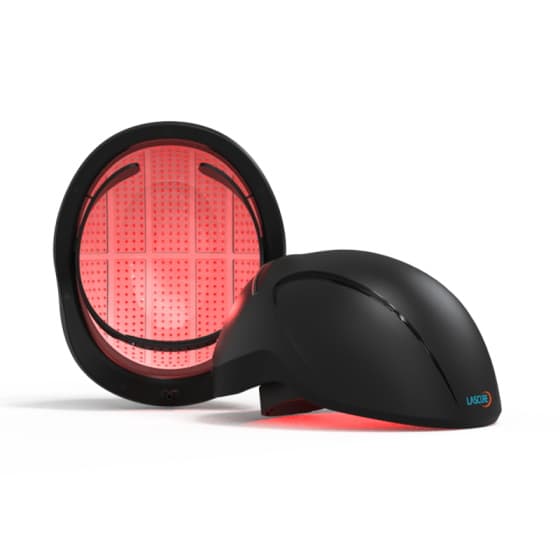
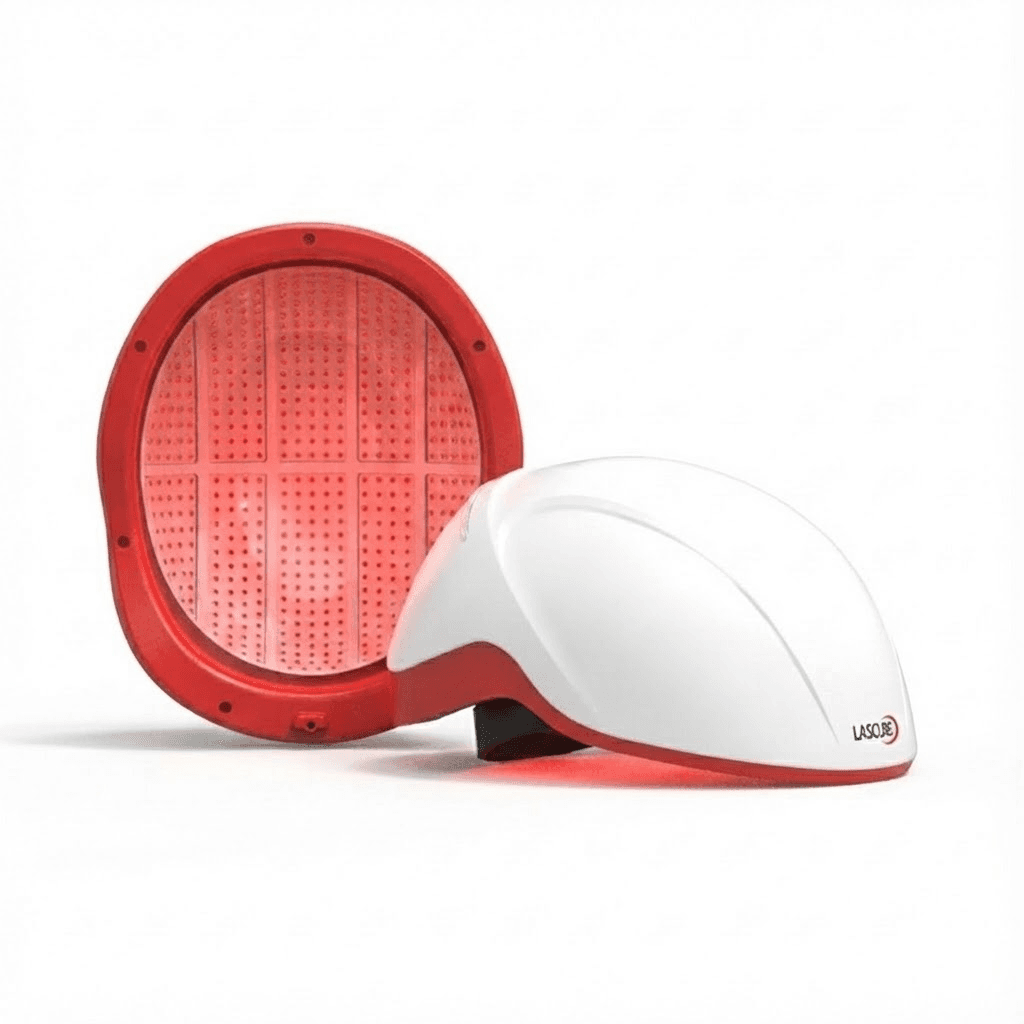
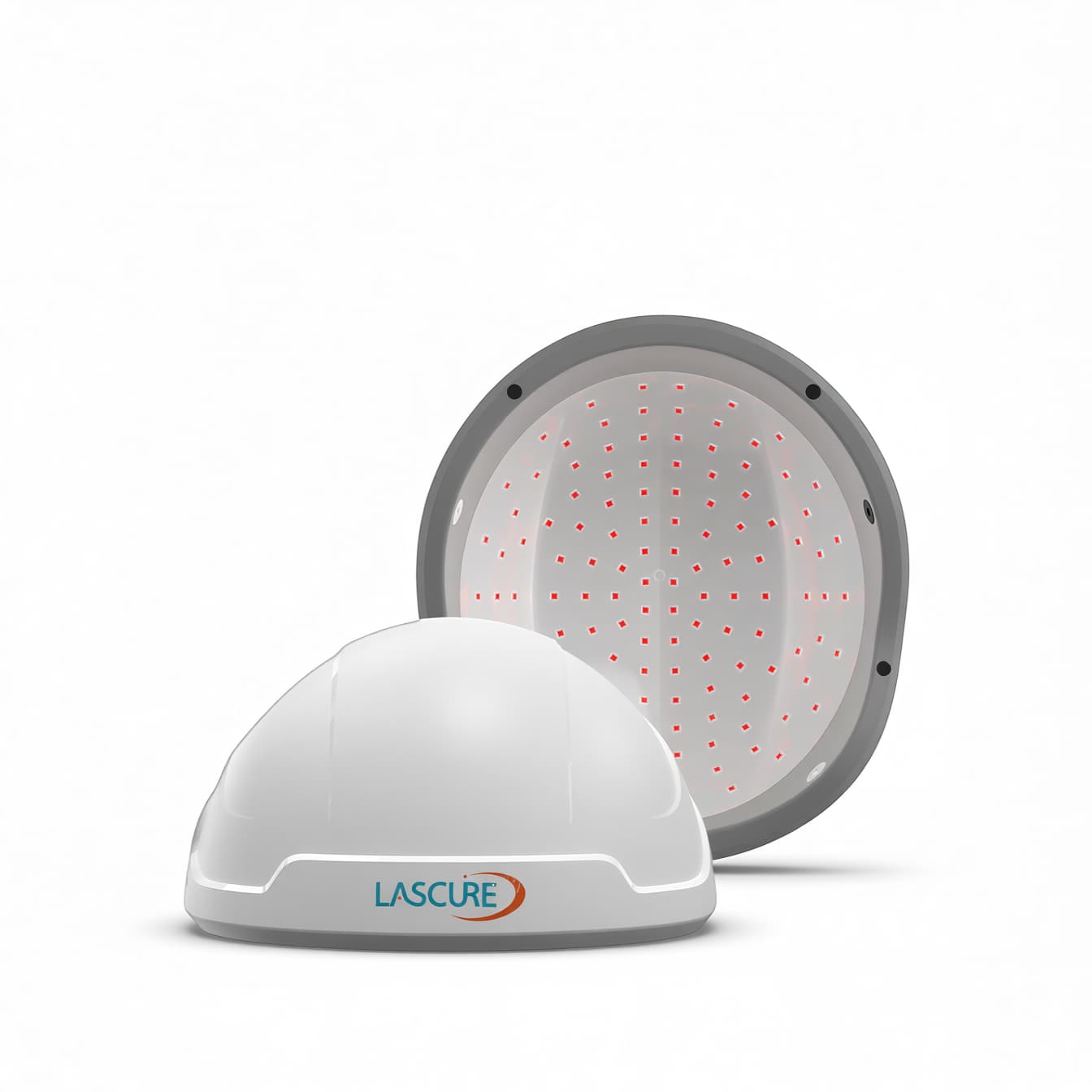
Products mentioned in this article
More articles
Biotin for your hair: does it really work? What science says
Biotin is the world's most popular hair supplement, but does it actually help? We dive into the clinical studies and discover that the truth is more nuanced than the supplement industry would have you believe.
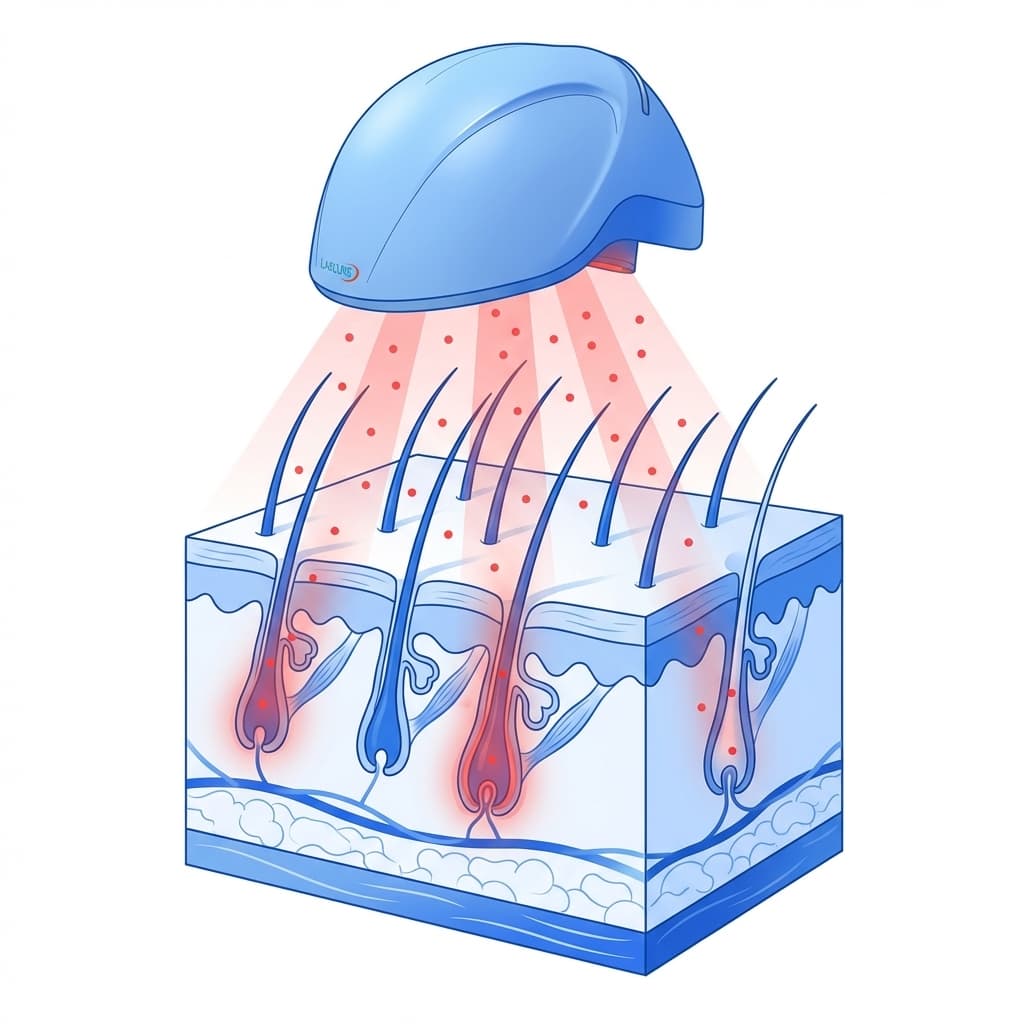
Do laser helmets really work against hair loss? What science says
Discover what clinical research says about laser helmets for hair loss. An honest, science-backed analysis without overclaims.
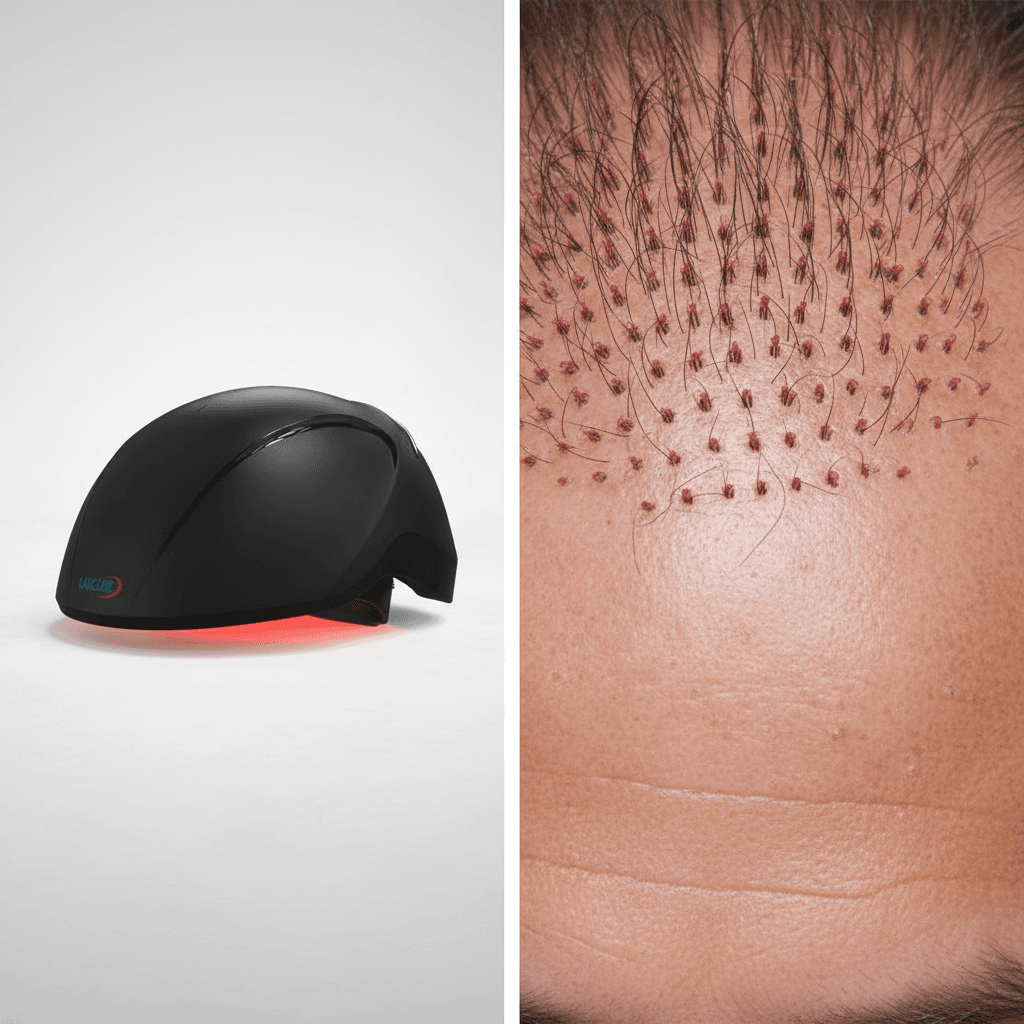
LLLT vs hair transplant: which is better for you?
A hair transplant delivers the most visible results, but costs thousands and requires surgery. A laser helmet works more gradually, but without cutting, without side effects, and at a fraction of the price. Which is the right choice?