Do laser helmets really work against hair loss? What science says
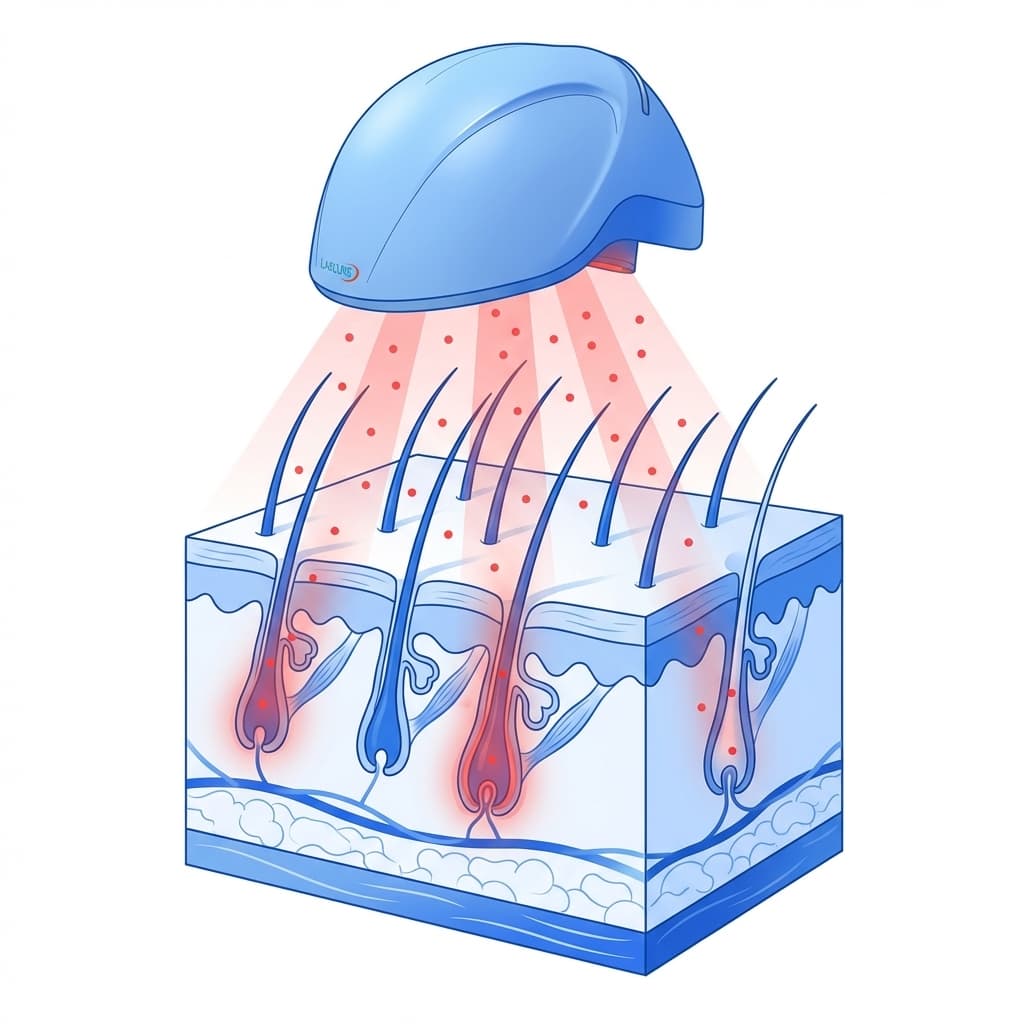
Table of contents
Hair loss affects more than just your appearance — it affects your confidence, your daily routine, and sometimes even your social life. If you're actively looking for solutions, you'll quickly come across laser helmets. Devices that supposedly stimulate hair growth with red light. But does it actually work? Or is it yet another promise that sounds too good to be true?
In this article, we dive into the science behind laser helmets. We look at what Low-Level Laser Therapy (LLLT) actually is, what clinical studies show, and what to look for if you're considering a laser helmet. Honest, evidence-based, and without overclaims.
What is LLLT (Low-Level Laser Therapy)?
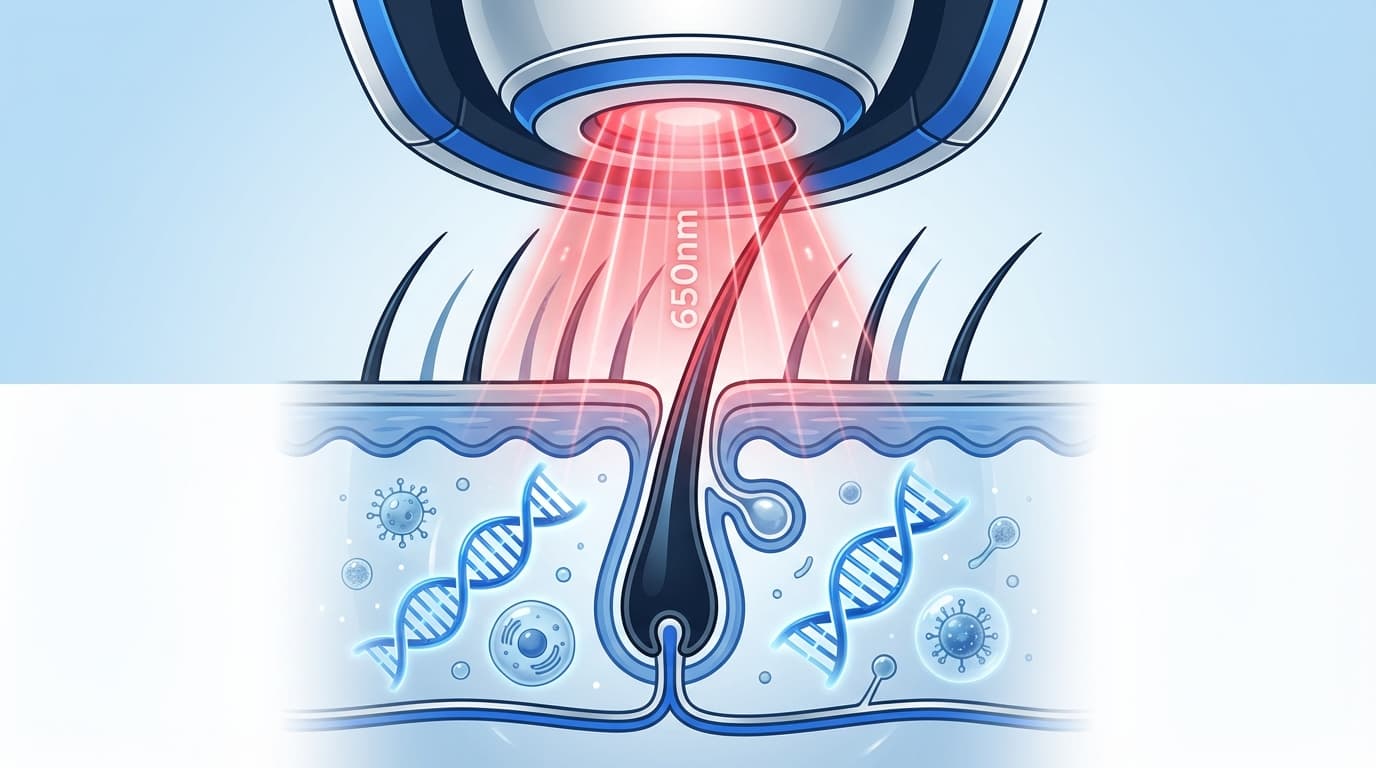
Low-Level Laser Therapy, or LLLT for short, is a form of photobiomodulation. That sounds complicated, but the principle is surprisingly simple: specific wavelengths of red light (typically 650-670 nanometers) penetrate the scalp and reach the hair follicles.
At the cellular level, something interesting happens. The light is absorbed by cytochrome c-oxidase, an enzyme in your cells' mitochondria. This stimulates the production of adenosine triphosphate (ATP) — your cells' energy source. More energy means more active cells, and in the case of hair follicles: an extended growth phase (anagen phase) and a delayed shedding phase.
It's similar to how sunlight helps plants grow, but highly targeted and using a specific wavelength that's safe for the skin. You don't feel a thing — no heat, no pain, no side effects. A treatment typically lasts 12-20 minutes per session, several times a week.
Important to know: LLLT isn't a new concept. It has been studied since the 1960s for various medical applications, from wound healing to pain management. Its application for hair growth is scientifically supported by dozens of studies over the past two decades.
Hoe LLLT haargroei stimuleert
Het werkingsmechanisme in 4 stappen
Rood laserlicht
650-670 nm golflengte dringt door de hoofdhuid
Absorptie door cellen
Cytochroom c-oxidase in de mitochondriën absorbeert het licht
ATP-productie stijgt
Meer celenergie activeert haarfollikels
Haargroei gestimuleerd
Verlengde groeifase (anageen) en dikker haar
What does the scientific research say?
The clinical basis for LLLT in hair loss is solid. Let's look at the key studies:
Jimenez et al. (2014) conducted a randomized, double-blind, sham-controlled study with 128 men and 141 women. After 26 weeks of treatment, the LLLT groups showed significantly higher hair density compared to the placebo group. This was one of the first large-scale studies to unambiguously demonstrate the effectiveness of LLLT for hair growth.
Afifi et al. (2017) published a meta-analysis of 11 randomized, controlled studies. Their conclusion: LLLT led to a statistically significant increase in hair density in both men and women with androgenetic alopecia. The meta-analysis confirmed that the effect could not be explained by a placebo effect.
Kim et al. (2013) reported an average increase in hair density of 51% after 24 weeks of LLLT treatment. While this is one of the higher percentages in the literature, it confirms the trend seen in other studies.
Lanzafame et al. (2013) showed that men who used an LLLT device had 39% higher hair counts after 16 weeks, compared to the control group.
Klinische studieresultaten
Low-Level Laser Therapy (LLLT) voor haargroei
+51%
Haardichtheid
Kim et al. (2013)
39%
Hogere haartelling
Lanzafame et al. (2013)
11
RCT's geanalyseerd
Afifi et al. (2017)
26
Weken gemiddelde behandeling
Jimenez et al. (2014)
In all honesty: not everyone responds the same way to LLLT. Factors such as the extent of hair loss, how long it has been occurring, and individual biological variation all play a role. People with recently onset hair loss and still-active follicles typically respond best. In completely bald areas where follicles have died off, the effect is limited.
What should you look for when choosing a laser helmet?
Not all laser helmets are created equal. There are several crucial factors to consider:
Number and type of light sources
This is perhaps the most important distinction. Some helmets use LEDs, others use actual laser diodes, and still others use a combination. Pure laser delivers a more concentrated, coherent beam of light that penetrates deeper into the scalp. Helmets with more diodes provide better coverage of the entire scalp.
Wavelength
Clinical studies use wavelengths between 630 and 670 nm. This is the 'sweet spot' for photobiomodulation of hair follicles. Check whether the manufacturer specifies the exact wavelength — if it's missing, that's a red flag.
Energy density and treatment time
The amount of energy delivered per square centimeter (measured in J/cm²) partly determines effectiveness. Too little energy yields no results; too much can be counterproductive. Quality manufacturers specify the optimal treatment time based on their device's energy density.
Clinical certifications
CE marking (Europe) and ISO 13485 (quality management system for medical devices) are important indicators of quality and reliability.
VCSEL technology: the latest generation
Most traditional laser helmets use edge-emitting laser diodes. A newer technology gaining ground is VCSEL — Vertical-Cavity Surface-Emitting Laser. The difference lies in how the light is emitted.
With a VCSEL, light is emitted perpendicular to the surface (rather than parallel to the edge). This results in a circular, uniform beam with consistent energy distribution across the entire irradiated area. In practice, this means every square centimeter of your scalp receives the same amount of therapeutic light.
Traditional laser diodes produce an elliptical, divergent beam that is unevenly distributed. This can result in 'hotspots' (too much energy) and 'dead zones' (too little energy). VCSEL technology eliminates this problem.
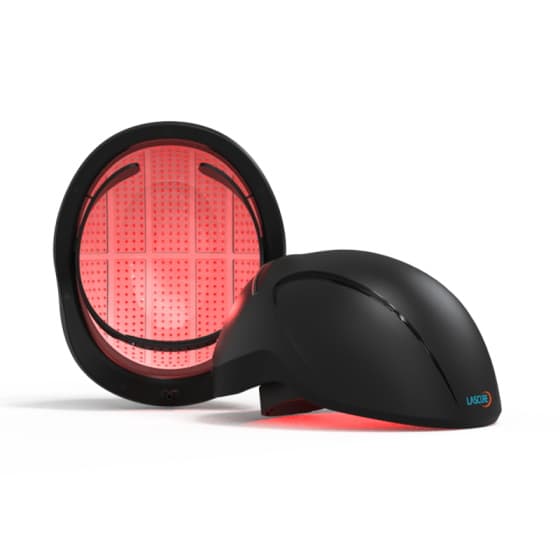
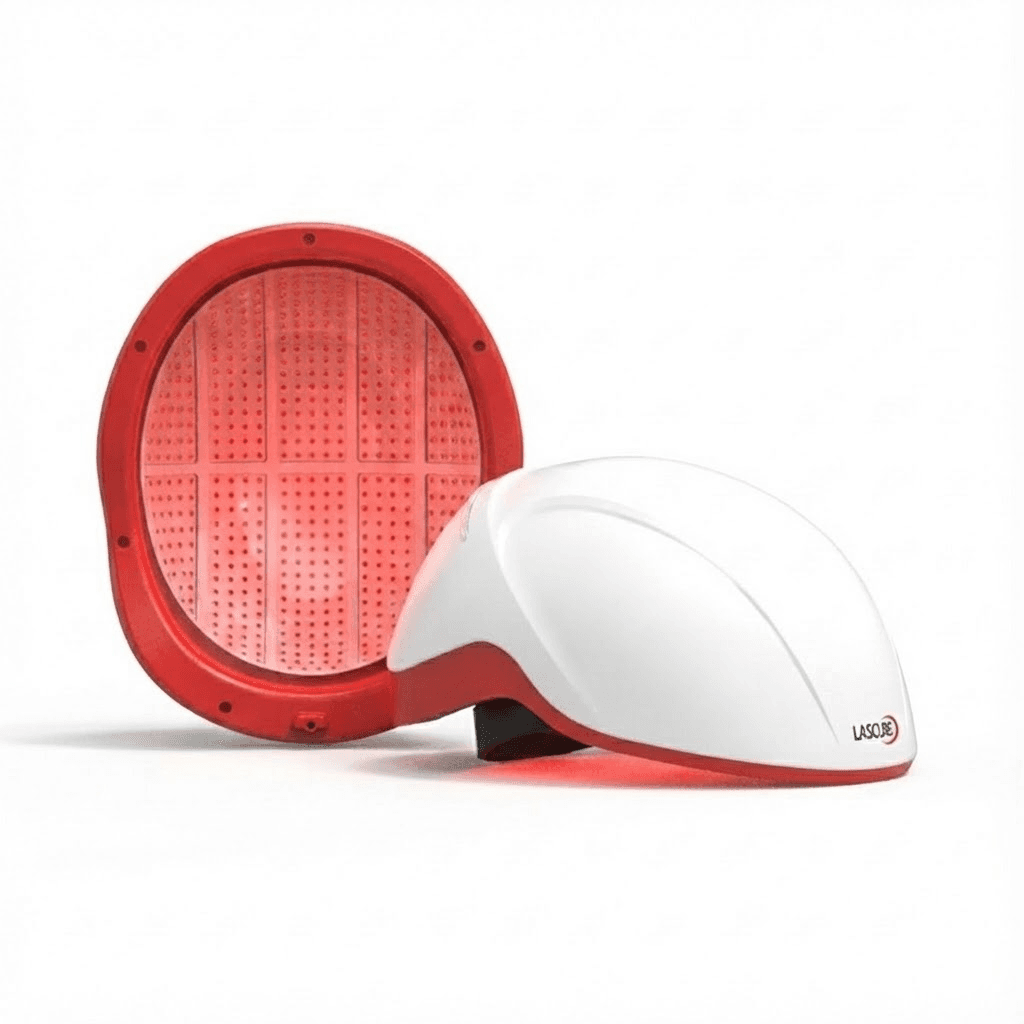
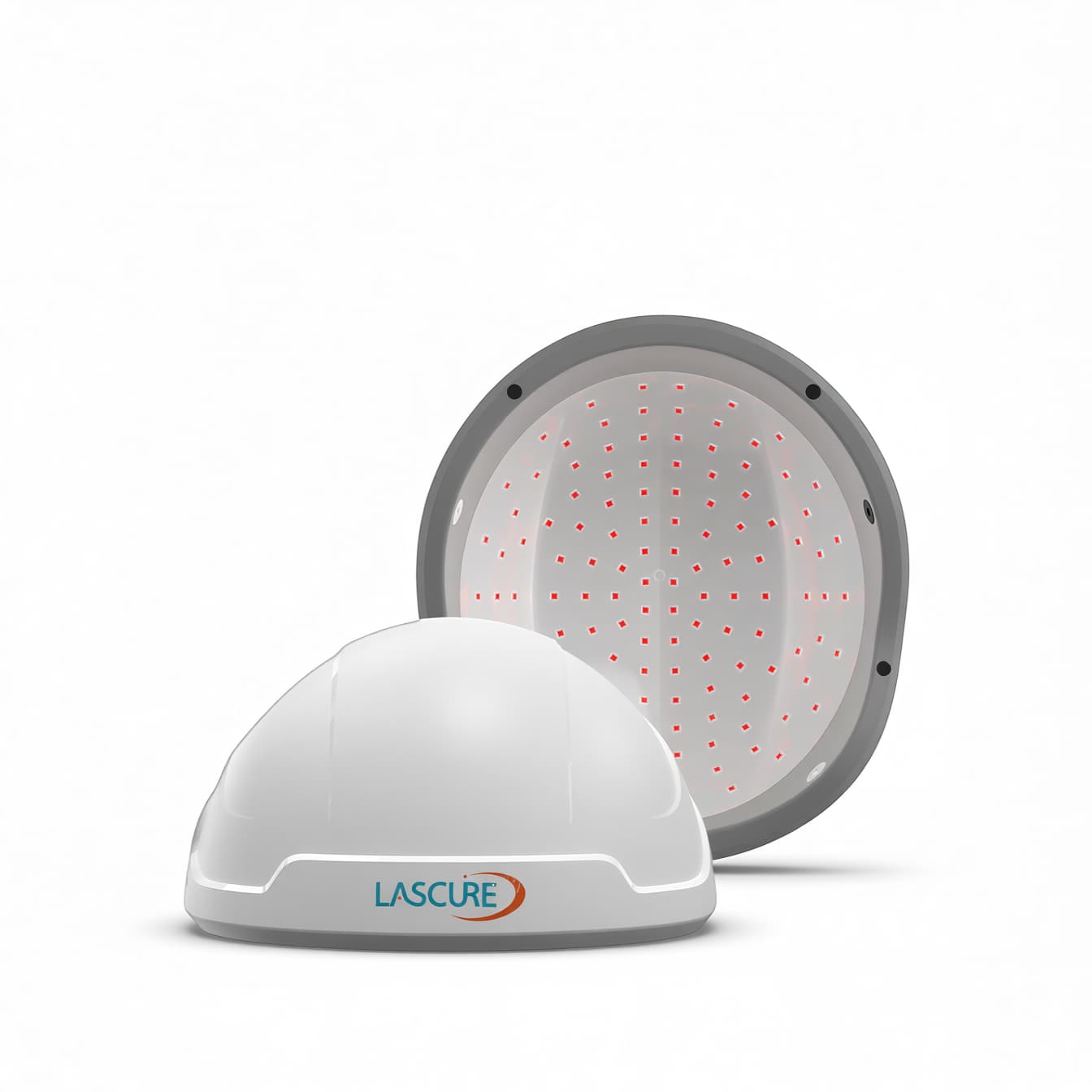
Additionally, VCSEL lasers are more energy-efficient and produce less heat, contributing to more comfortable and longer treatment sessions. The Lascure Ultra 552 is an example of a laser helmet that runs entirely on VCSEL technology, with 552 medical VCSEL laser diodes for maximum coverage.
Frequently asked questions
How long before you see results?
Most clinical studies show measurable results after 12-16 weeks of consistent use. Visible results (thicker, fuller hair) are often reported after 16-24 weeks. Patience and consistency are essential — LLLT works gradually by influencing the hair growth cycle, not by instantly creating new hair.
Are there side effects?
LLLT is generally considered very safe. No significant side effects were reported in clinical studies. The light is non-thermal (produces no heat that can damage the skin) and non-ionizing (no UV radiation). Occasionally, users report mild, temporary itching on the scalp in the first few weeks, which is attributed to increased blood circulation.
Does it work for every type of hair loss?
LLLT is most effective for androgenetic alopecia (hereditary hair loss) — the most common type in both men and women. For other forms such as alopecia areata or medication-induced hair loss, the evidence is less conclusive. It works best when there are still active, miniaturized hair follicles present. In completely bald areas, the effect is limited.
How often should you use it?
Most clinical protocols recommend 3 sessions per week, with at least one rest day in between. Each session typically lasts 12-20 minutes, depending on the device. More is not better — overtreatment can actually diminish the effect through overstimulation of the cells.
Conclusion
The science is clear: LLLT is a proven, safe method to stimulate hair growth in androgenetic alopecia. It's not a miracle cure — it requires patience, consistency, and realistic expectations. But the clinical data from dozens of studies shows that for many people, it's an effective, non-invasive option.
What to look for: choose a device with real laser diodes (not just LEDs), the right wavelength (650-670 nm), and relevant certifications (CE, ISO 13485). Newer VCSEL technology offers advantages in uniformity and coverage.
Want to learn more about which device is right for you? Check out our product overview or take the product quiz for personalized advice.
Products mentioned in this article
More articles

Biotin for your hair: does it really work? What science says
Biotin is the world's most popular hair supplement, but does it actually help? We dive into the clinical studies and discover that the truth is more nuanced than the supplement industry would have you believe.
Stop Hair Loss: 6 Proven Methods Honestly Compared
Your hair is thinning and you want to do something about it. But what actually works? We compare six treatments — from hair transplants to DHT blockers — on effectiveness, cost, and what you can realistically expect.
LLLT vs hair transplant: which is better for you?
A hair transplant delivers the most visible results, but costs thousands and requires surgery. A laser helmet works more gradually, but without cutting, without side effects, and at a fraction of the price. Which is the right choice?